The 2-Day Mount Fuji Climb from Tokyo with a Mountain Guide
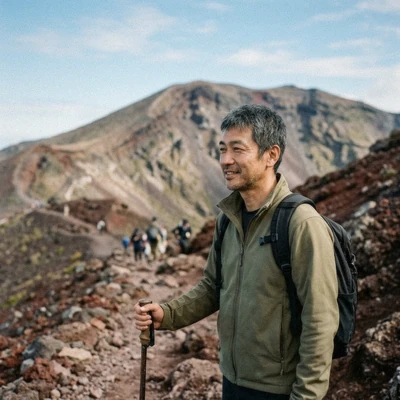
Two days is the honest amount of time Mount Fuji asks for. Meet in Shinjuku in the morning, ride out to the trailhead, climb to a hut near the 8th station by evening, sleep for a few hours, and finish the last stretch in the dark to reach the crater as the sun comes up. This is the most-booked version of that plan: a licensed mountain guide, the 2026 permit taken care of, and an onsen soak before the ride home. Here is exactly how the two days run.
The Climb at a Glance
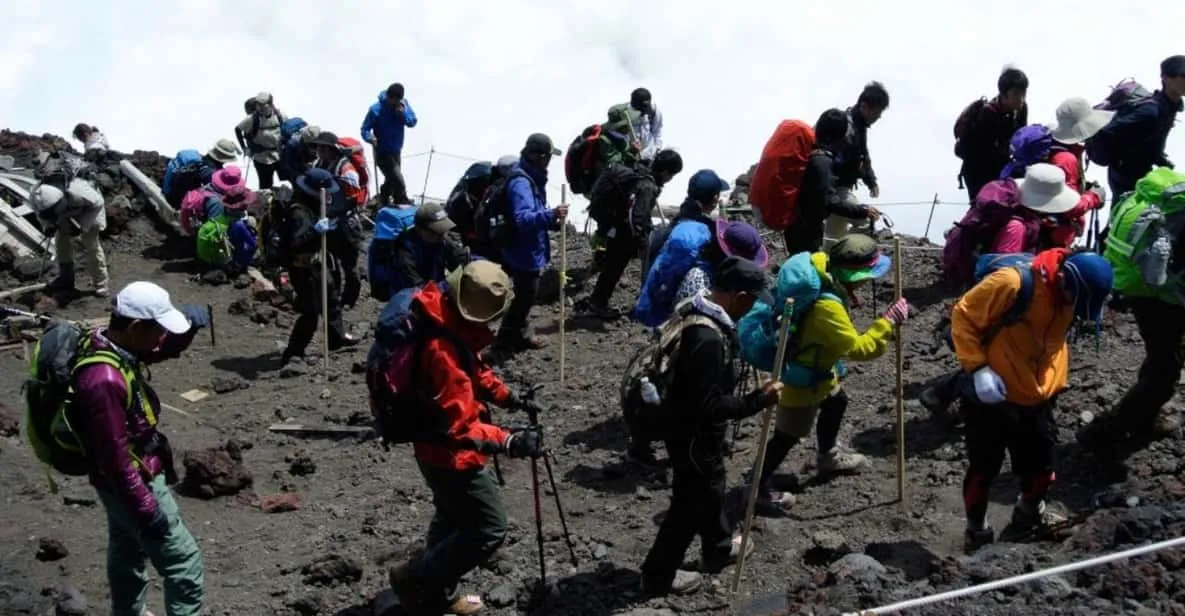
Day one climbs to a mountain hut near the 8th station; day two summits at dawn and descends. The overnight is what lets your body handle the altitude.
The most popular and best-supported route up Fuji, with the most huts and the quickest rescue access if the weather turns.
Group meet-up at Tochomae Station in central Tokyo, then a charter coach out to the Subaru Line 5th Station trailhead.
An English-speaking mountain guide sets the pace, watches the group for altitude sickness, and reads the weather on the mountain.
A reserved bunk and two meals at the hut are included, along with the 4,000 yen 2026 entry fee arranged for you.
The most-reviewed climb on this site at 4.3 stars, which is the closest thing to a track record you get on a mountain.
Check Dates & Availability
Why Most Climbers Book the Two-Day Version
The single biggest reason people fail to summit Mount Fuji has nothing to do with fitness. It is the altitude. The summit sits at 3,776 m, high enough that the thin air turns a straightforward walk into a slow, headache-prone slog if you climb too fast. The two-day format is the fix. You gain most of the height on day one, rest and eat at a hut around 3,100 to 3,400 m, and give your body several hours to adjust before the final push. Climbers who try to do the whole thing in one overnight go, the practice known as bullet climbing, are far more likely to turn back sick, which is exactly why the mountain now closes the trail gates to anyone without a hut booking between 2 pm and 3 am.
Booking a guided two-day climb takes the 2026 admin off your plate as well. Every climber now pays a 4,000 yen entry fee and is expected to reserve online before arriving, and the Yoshida trail caps numbers at 4,000 climbers a day. On this tour the operator handles the reservation, the fee and your hut bed, so you clear the gate without arranging any of it. It is the most booked climb here for a reason: it removes the two things that trip up first-timers, the altitude and the paperwork. If you are still comparing formats, the full range of guided Mount Fuji climbs sits on the homepage.
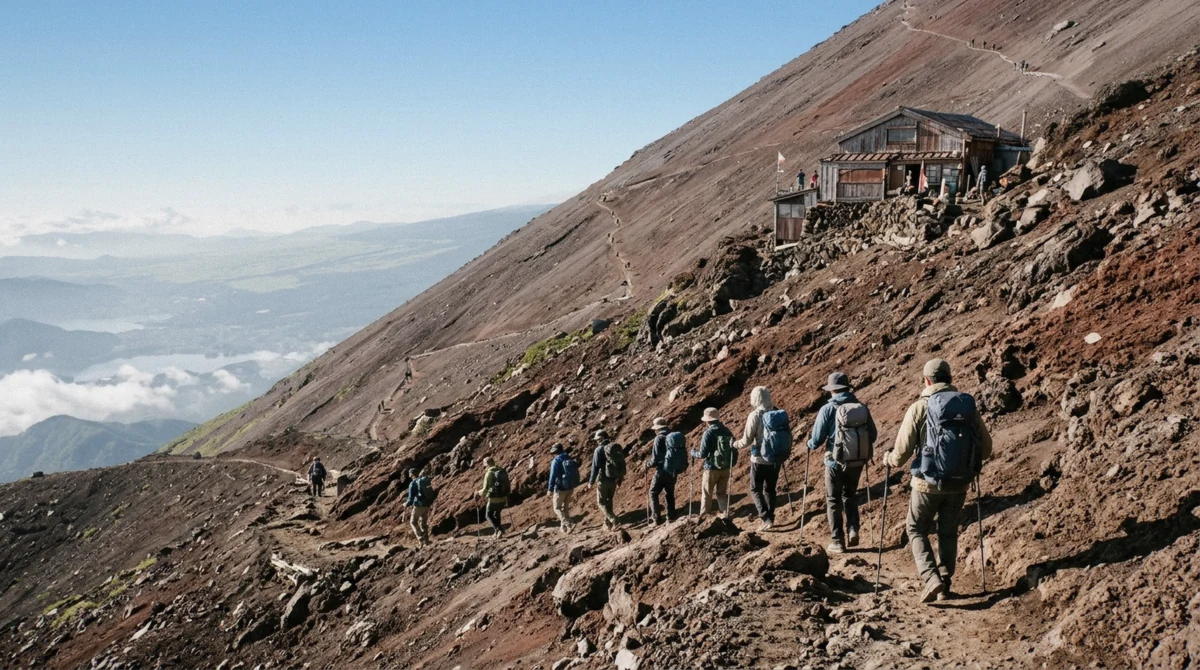
The Yoshida trail's red-brown switchbacks make up most of day one's climb to the hut.
How the Two Days Unfold
The rhythm of the climb is the same whichever hut your group is assigned, and it is built around reaching the summit for goraiko, the sunrise seen from the top of Fuji.
- Morning: meet at Tochomae Station in Shinjuku and board the charter coach for the roughly two-hour ride to the 5th station
- Midday: gear check and lunch at the trailhead around 2,300 m, where the guide runs through pace and altitude basics
- Afternoon: climb the Yoshida trail through the 6th and 7th stations to your mountain hut near the 8th station
- Evening: a hot dinner at the hut, then an early night in a shared bunk to grab a few hours of sleep
- Pre-dawn: wake in the dark, layer up against near-freezing cold, and climb the final stretch by headlamp
- Sunrise: reach the crater rim for goraiko, with time for photos before the guide leads the descent
- Late morning: descend the zig-zag trail, then transfer to an onsen for a hot-spring soak before the drive back to Tokyo
What's Included and What to Budget For
Included in your booking:
- Round-trip charter coach between central Tokyo and the 5th-station trailhead - Licensed English-speaking mountain guide for the full two days - One night in a mountain hut near the 8th station with a reserved bunk - Two meals on the mountain: a hot dinner and an early breakfast - The 4,000 yen 2026 entry fee and trail reservation, arranged for you - A hot-spring (onsen) stop on the way back down
Budget separately:
- Gear rental if you need it (jacket, poles, headlamp) — confirm with the operator in advance - Extra food, water and drinks bought at the huts, which cost more the higher you go - A few hundred yen in coins for the hut toilets - Travel insurance that covers high-altitude trekking, which is strongly recommended
The Two-Day Schedule
-
Day 1 · Morning
Meet in Shinjuku
Group meet-up at Tochomae Station, then the charter coach out to the Subaru Line 5th Station trailhead at about 2,300 m.
-
Day 1 · Afternoon
Climb to the hut
Gear check and lunch, then climb the Yoshida trail through the 6th and 7th stations to a mountain hut near the 8th station.
-
Day 1 · Evening
Dinner and rest
A hot dinner at the hut and an early night in a shared bunk to rest before the summit push.
-
Day 2 · Pre-dawn
Summit by headlamp
Wake in the dark and climb the final stretch to the crater rim in time for the goraiko sunrise.
-
Day 2 · Morning
Descend and soak
Descend the zig-zag trail, then an onsen stop before the coach back to Tokyo.
Know Before You Climb
A few things regular climbers wish they had known before day one:
- The summit can sit near freezing even in August, while Tokyo is hot — pack real cold-weather layers, not just a light jacket
- Three items are checked at the Yoshida gate: proper trekking shoes, warm clothing, and waterproof rainwear
- Hut sleep is basic and shared; earplugs and an eye mask make the few hours count
- Altitude sickness is about pace, not strength — drink water, walk slowly, and tell your guide early if you feel unwell
- Guides will turn a group back below the summit if the weather is dangerous, so keep your date flexible
Where the Climb Begins
Who This Climb Suits
This is the right climb for a fit first-timer who wants the safest, best-supported way to the summit and does not mind sharing the trail with other climbers. It suits anyone who can walk six to eight hours over hilly ground and would rather have the altitude, the hut and the 2026 permit handled by a guide. It is less ideal if you are chasing solitude — the Yoshida route is the busiest on the mountain.
If quiet matters more than support, a Hoei Crater route is the calmer alternative, and travellers short on time can look at the one-day summit climb instead.
2-Day Mount Fuji Climb FAQs
How fit do I need to be for the 2-day climb?
Reasonably fit, not an athlete. If you can walk six to eight hours over hilly terrain with a day pack, you have the base fitness. The hut stay breaks the climb in two and the guide sets a slow pace, so the harder part is coping with the thin air rather than the distance.
Where does the tour meet in Tokyo?
At Tochomae Station in Shinjuku, central Tokyo, where the group boards a charter coach for the roughly two-hour ride to the Subaru Line 5th Station trailhead. The exact time is on your confirmation.
What happens if I can't reach the summit?
Guides will hold the group below the summit if the weather is dangerous, and you can descend at any point if the altitude affects you. Reaching the 8th or 9th station is still a real climb, and the guide's job is to keep you safe rather than force the top.
Is the 4,000 yen entry fee included?
Yes. The operator arranges the 2026 entry fee and the trail reservation as part of the booking, so you clear the trailhead gate without paying or reserving separately.
Do I need my own gear?
You need proper trekking shoes, warm layers, a headlamp and waterproof rainwear, which are checked at the gate. Bulkier items can usually be rented through the operator — arrange it when you book rather than on the day.
What Climbers Say
Everything was well organised, from the departure to the ascent to the onsen after and the drop-off back in Tokyo. Anyone active in life can do this without special training, though you'll have some muscle aches after, which is what the onsen is for.
Climbing above the clouds and summiting for sunrise were the highlights. Like any non-technical climb it's a continuous uphill slog, but it isn't all that challenging for the reasonably fit.
I'm eighty and made it to the eighth station. The advice and encouragement from my guides was worth every yen — they even offered to stay with me to try for the summit.