A Quieter Mount Fuji Climb via the Hoei Crater
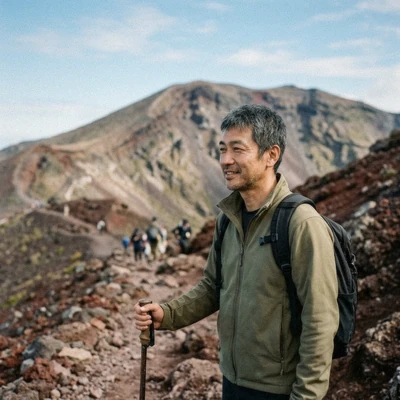
The Yoshida trail gets the crowds, the huts and the queues near the summit. This climb takes a different line. It follows the dramatic rim of the Hoei Crater, Fuji's youngest side vent, on a quieter trail to Kengamine at 3,776 m, with the same hut stay, meals and sunrise but far fewer people around you. Here is what the quiet route is like and who it suits.
The Climb at a Glance
The climb follows the rim of the Hoei Crater, Fuji's youngest side vent, formed in the 1707 eruption.
A quieter trail than the busy Yoshida route, so you climb with far fewer people around you.
The route still reaches Japan's highest point on the crater rim.
A mountain guide leads the climb and paces the group for the altitude.
Overnight hut stay, meals and transport from Shinjuku are included, plus the 4,000 yen 2026 entry fee.
Every early climber has rated it five stars, with guides praised for getting the whole group to the top.
Check Dates & Availability
Why Take the Quieter Trail
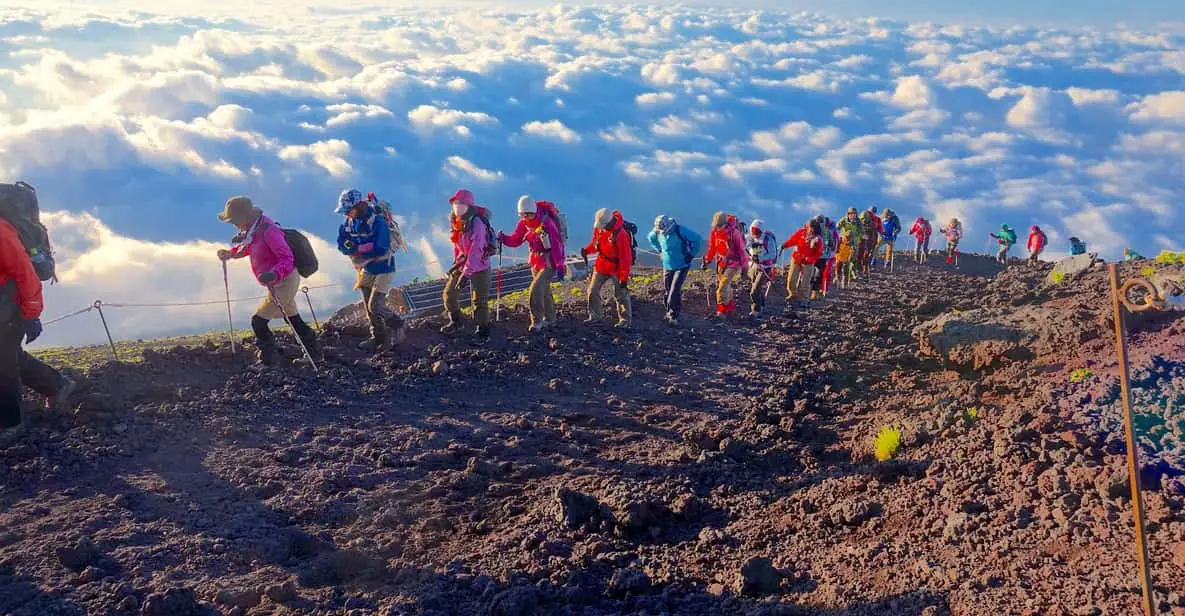
At the height of the season, the Yoshida trail near the summit can back up into a slow-moving line of headlamps, with the last stretch to the crater turning into a queue. For some climbers that shared energy is part of the appeal. For others it is the opposite of why they came to a mountain. This climb is the answer to the second group. By following the rim of the Hoei Crater, Fuji's youngest side vent from the 1707 eruption, it trades the busiest route for a quieter, more dramatic one, and you spend the climb looking at the mountain rather than the back of someone's pack.
You give up a little support for the quiet. The Hoei side has fewer huts than the Yoshida trail, so the format leans more on your guide and your own preparation. But you still get the hut stay, the meals, the 2026 permit handled for you, and the summit at Kengamine, all at the same $238 as the shortest route. Every early climber has rated it five stars. If solitude matters more to you than the busiest, best-served trail, this is the pick of the guided Fuji climbs; if you would rather have maximum support, the most-booked Yoshida climb is the safer bet.
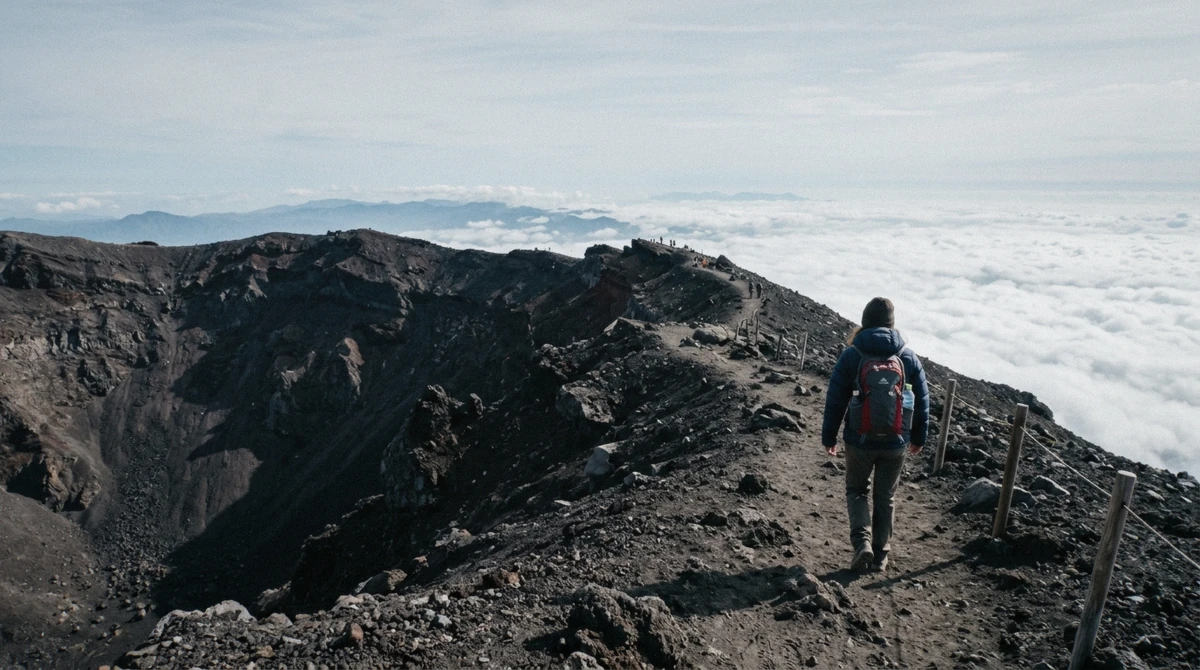
The Hoei Crater rim gives a dramatic, far quieter line to the summit than the Yoshida trail.
How the Two Days Unfold
The rhythm is a familiar two-day climb, run on the quieter side of the mountain.
- Morning: meet in Shinjuku and ride the coach to the trailhead
- Afternoon: climb the quieter trail along the Hoei Crater rim to a mountain hut
- Evening: a hot dinner and a night's rest at the hut
- Pre-dawn: the final push by headlamp to the crater for the goraiko sunrise
- Morning: reach Kengamine at 3,776 m, then begin the descent
- Midday: descend and transfer back to Tokyo
What's Included and What to Budget For
Included in your booking:
- Round-trip coach between Shinjuku and the trailhead - Mountain guide for the two-day climb - One night in a mountain hut with meals - The 4,000 yen 2026 entry fee and trail reservation, arranged for you
Budget separately:
- Gear rental if needed — confirm with the operator in advance - Extra food, water and drinks at the huts, which are fewer on this side - Coins for the hut toilets - Travel insurance covering high-altitude trekking
The Two-Day Schedule
-
Day 1 · Morning
Meet in Shinjuku
Group meet-up and coach to the trailhead on the quieter side of the mountain.
-
Day 1 · Afternoon
Climb the Hoei rim
A quieter climb along the Hoei Crater rim to a mountain hut.
-
Day 1 · Evening
Dinner and rest
A hot dinner and a night's sleep before the summit push.
-
Day 2 · Pre-dawn
Summit for sunrise
The final climb to the crater for the goraiko sunrise, then Kengamine at 3,776 m.
-
Day 2 · Midday
Descend to Tokyo
Descend the trail and transfer back to the city.
Know Before You Climb
The quieter side asks a little more self-reliance:
- Fewer huts than the Yoshida trail, so lean on your guide and carry enough water and snacks
- You still gain the full height to 3,776 m — climb slowly and hydrate against altitude sickness
- The summit is near freezing at dawn even in summer, so pack warm layers and gloves
- Proper trekking shoes, warm clothing and rainwear are checked at the gate
- Weather can stop a group below the summit, so keep your date flexible
Where the Climb Begins
Who This Climb Suits
This climb is for people who want Fuji without the queue: hikers who value quiet and dramatic scenery over the busiest, best-served trail, and who are comfortable with a route that has fewer huts. It rewards a little extra self-reliance with a far calmer climb. It is less suited to nervous first-timers who want maximum support at every station — they will feel more at ease on the English-guided 8th-station climb.
Quiet Fuji Climb FAQs
Is the Hoei Crater route really quieter?
Yes. It follows a different, less-travelled line than the busy Yoshida trail, so you climb with far fewer people around you — no summit queue of headlamps. The trade-off is fewer huts and a little less support along the way.
What is the Hoei Crater?
It is Fuji's youngest side vent, formed in the 1707 Hoei eruption, and its dramatic rim gives this climb its scenery. The route follows the rim on the way to the summit.
Do I still reach the summit?
Yes. The quiet route still finishes at Kengamine, 3,776 m, the highest point in Japan, with the same goraiko sunrise as the busier trails.
Is it suitable for first-timers?
It suits fit first-timers who are comfortable with fewer huts and a little more self-reliance. Nervous first-time climbers who want support at every station may prefer the well-served Yoshida route instead.
Why is it the same low price as the shortest route?
At $238 it is one of the lower-priced guided summit climbs here, and it still includes the guide, hut, meals, transport and the 2026 entry fee. You trade a little hut support for quiet, not for a higher price.
What Climbers Say
A great two-day hike of Mt Fuji. Our guide Oji and the company were awesome, and the people at the stations and the mountain hut were very nice as well. Well worth the price and the time.
A very good guide who got the whole group to the summit in a great atmosphere. On the way back, the stop at the Japanese baths was very welcome.
So much quieter than I expected from Fuji. The scenery along the crater rim was the highlight, and we barely saw another group until the top.