The Shortest Route to the Mount Fuji Summit
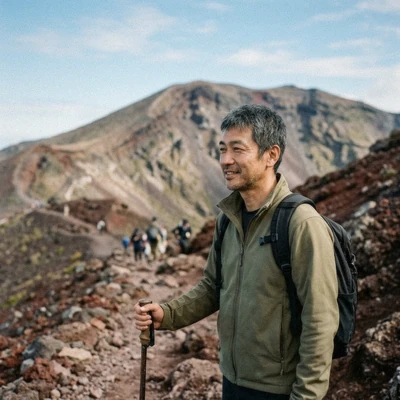
Not everyone wants the longest day on the mountain. This two-day climb takes the shortest guided line to the top, staying high overnight and reaching Kengamine at 3,776 m, Japan's highest point, with less trail than the standard routes. You still get the hut stay, the meals and the goraiko sunrise — just fewer hours on your feet. Here is how the shortest route works and who it suits.
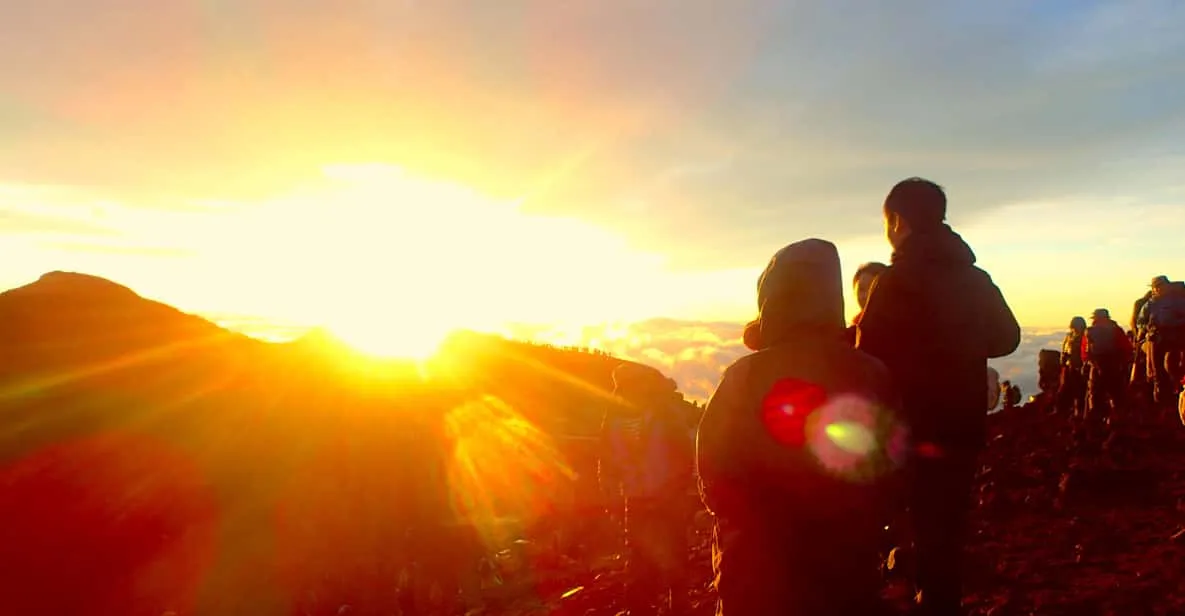
The Climb at a Glance
The most direct guided trail to Fuji's summit, with less distance than the standard Yoshida approach.
You still reach Japan's true high point on the crater rim — the short route does not shortcut the summit.
You stay high on the mountain before the final push, keeping the second-day climb short.
A mountain guide leads the climb and paces the group for the altitude.
Hut stay, meals and round-trip transport from Shinjuku are included, plus the 4,000 yen 2026 entry fee.
One of the lower-priced guided summit climbs on this site, at the same starting price as the quieter routes.
Check Dates & Availability
Less Trail, Same Summit
The appeal here is simple: fewer hours walking for the same reward. By taking the shortest guided line and staying high overnight, this climb trims the total distance without skipping the summit or the sunrise. For climbers who are fit enough but would rather not spend the longest possible day on their feet, that is a real advantage — less time exposed to the weather, less wear on the knees, and a shorter second-day push to the crater.
The trade-off is that a shorter line is often a steeper one, so the climbing you do is concentrated rather than spread out. You still gain the same height to 3,776 m, just over less ground. The hut stay does the acclimatisation work, the guide sets the pace, and the 2026 permit and reservation are handled for you. At $238 it is also one of the lower-priced guided summit climbs on the site. If distance is your main concern, it is the most efficient option among the guided Fuji climbs; if crowds bother you more, compare it with the Hoei Crater route.
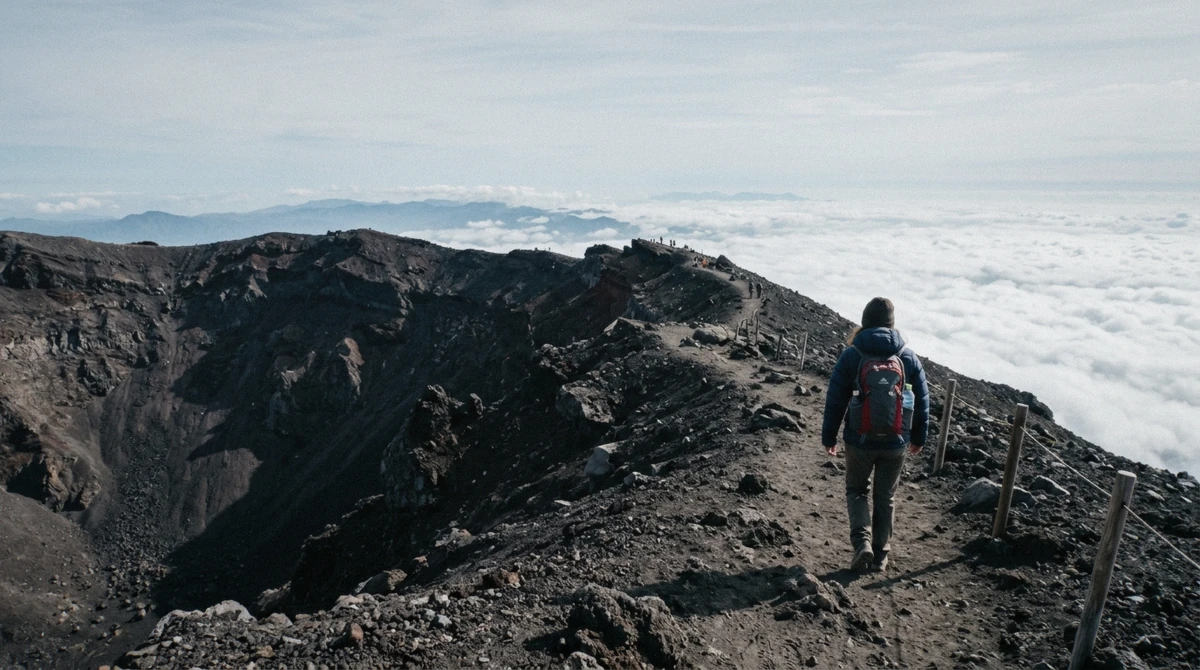
The short route still finishes at Kengamine, 3,776 m — the highest point in Japan.
How the Two Days Unfold
The schedule keeps the walking short by climbing high on day one and finishing quickly on day two.
- Morning: meet in Shinjuku and ride the coach to the trailhead
- Afternoon: climb the shortest guided line to a hut high on the mountain
- Evening: a hot dinner and a night's rest at the hut
- Pre-dawn: a short final push to the crater in time for the goraiko sunrise
- Morning: circle to Kengamine at 3,776 m, then begin the descent
- Midday: descend and transfer back to Tokyo
What's Included and What to Budget For
Included in your booking:
- Round-trip coach between Shinjuku and the trailhead - Mountain guide for the two-day climb - One night in a hut high on the mountain with meals - The 4,000 yen 2026 entry fee and trail reservation, arranged for you
Budget separately:
- Gear rental if needed — confirm with the operator in advance - Extra food, water and drinks at the huts - Coins for the hut toilets - Travel insurance covering high-altitude trekking
The Two-Day Schedule
-
Day 1 · Morning
Meet in Shinjuku
Group meet-up and coach to the trailhead.
-
Day 1 · Afternoon
Climb the short line
The shortest guided trail up to a hut high on the mountain.
-
Day 1 · Evening
Dinner and rest
A hot dinner and a night's sleep before the summit push.
-
Day 2 · Pre-dawn
Short summit push
A short climb to the crater for the goraiko sunrise, then Kengamine at 3,776 m.
-
Day 2 · Midday
Descend to Tokyo
Descend the trail and transfer back to the city.
Know Before You Climb
A shorter route has its own quirks worth knowing:
- A shorter line is often steeper — expect concentrated climbing rather than a gentle grade
- You still gain the full height to 3,776 m, so the altitude rules apply: slow pace, plenty of water
- The summit is near freezing at dawn even in summer, so pack warm layers and gloves
- Proper trekking shoes, warm clothing and rainwear are checked at the gate
- Huts are basic and can be crowded on busy dates; earplugs and an eye mask help
Where the Climb Begins
Who This Climb Suits
This climb suits fit hikers who want the summit and the sunrise but would rather not spend the longest possible day walking, and who do not mind a steeper, more concentrated ascent. It is a good-value pick at $238. It is less ideal for anyone who wants the gentlest possible grade or the most hut choice — those climbers are better served by the most-booked Yoshida climb, which trades distance for the best-supported trail on the mountain.
Shortest-Route Fuji Climb FAQs
Is the shortest route easier?
Not necessarily. It is less walking overall, which is easier on time and knees, but a shorter line to the same 3,776 m summit is often steeper, so the climbing is more concentrated. You still gain the full height, so the altitude is the same challenge.
Do I still reach the true summit?
Yes. The short route still finishes at Kengamine, 3,776 m, the highest point in Japan. It shortens the trail, not the summit.
Why is it cheaper than some other climbs?
At $238 it is one of the lower-priced guided summit climbs here, in line with the quieter routes. It still includes the guide, hut, meals, transport and the 2026 entry fee.
How fit do I need to be?
Reasonably fit, with the ability to handle a steeper grade. If you can walk uphill for several hours the hut stay and guide will get you the rest of the way, but the concentrated climbing is real.
What if the weather is bad?
The guide can hold the group below the summit if conditions turn dangerous. Free cancellation and a flexible date protect you against a poor forecast.
What Climbers Say
Tom was a fantastic guide. He made sure we were all comfortable and feeling good about the climb, and the tour ran on schedule, which I really appreciated.
Less time on the trail was exactly what I wanted, and we still made the summit for sunrise. The steeper sections were tough but short.
Good value and well organised. The guide kept a steady pace and the shorter route meant we weren't walking all day.